
Pull and Pray Effectiveness: Does Withdrawal Work as Birth Control?

Withdrawal - often called “pull and pray” is one of the oldest documented approaches to avoiding pregnancy. Some women swear by it, while some warn against it, so many are unsure what to make amidst the conflicting stories.
To understand why, we need to look at how withdrawal has been used historically, what research actually says about its effectiveness, the real reason it fails for many women. We’ll also explore how it compares to evidence‑based fertility awareness, and what the emotional and relational costs can be of using withdrawal.
The goal here isn’t to dismiss anyone’s lived experience, but to offer clarity grounded in research and real‑world nuance.
The History of Withdrawal
Withdrawal - technically called ‘coitus interruptus’ - is one of the oldest documented forms of contraception. Withdrawal appears in historical, religious, and anthropological records going back thousands of years. It is even referenced in ancient texts. Before condoms, cervical caps, and hormonal methods were widely available, couples often relied on and pulling out before ejaculation to try to prevent pregnancy. In many cultures throughout history withdrawal was a known option, not necessarily because it always worked, but because it was something people could try when no other options existed.
The phrase “pull and pray” accurately captures the reality of this method: its success relies heavily on timing and hope. There’s nothing between you and pregnancy except timing and your partner’s discipline and ability to withdraw before ejaculation.
How Withdrawal Works Biologically
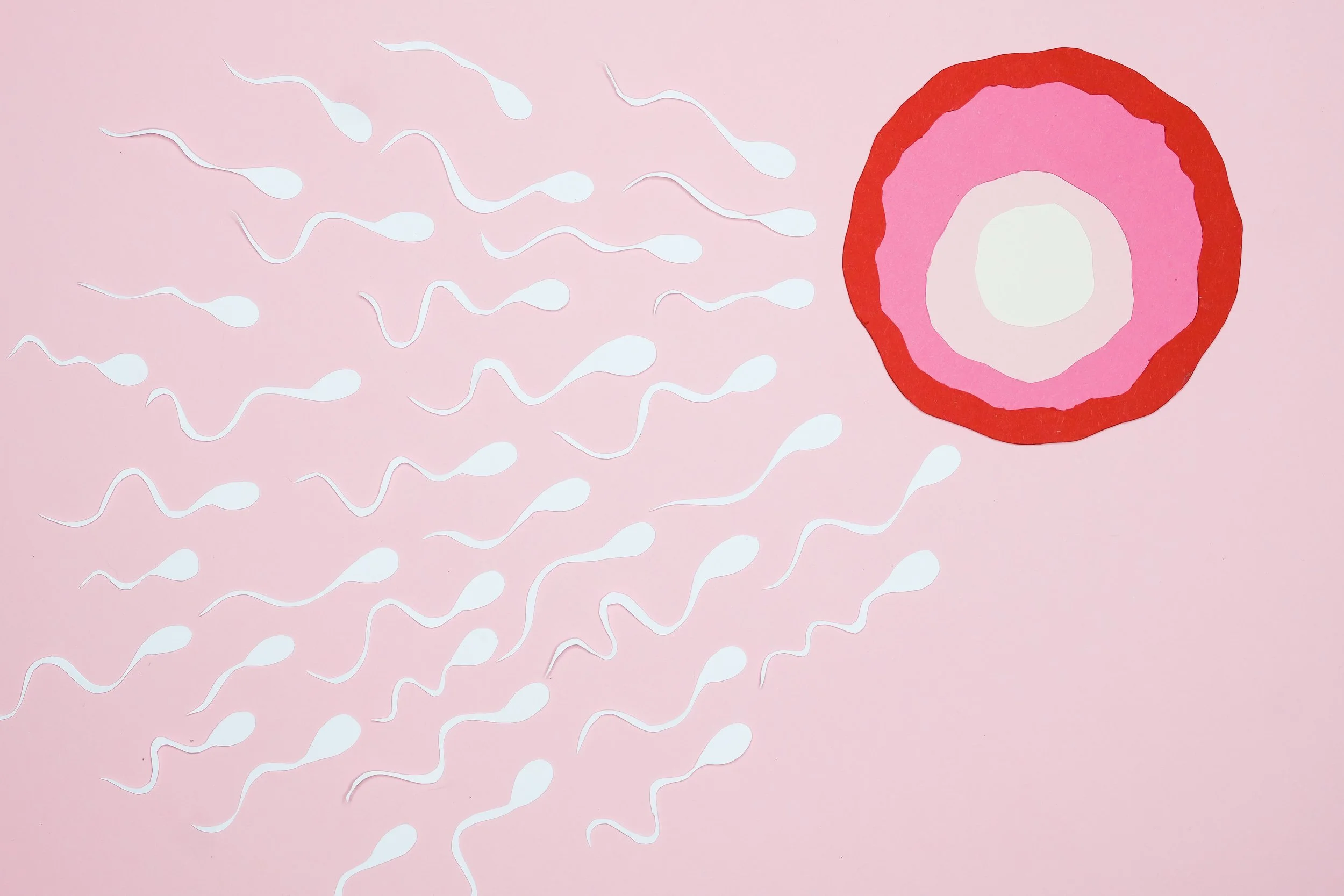
The idea behind withdrawal is that one can prevent sperm from entering the vagina if the man pulls out his penis during ejaculation - thus ejaculating outside of the woman’s vagina. Outside of the issue of discipline, the main biological question surrounding withdrawal is whether pre-ejaculate fluid contains sperm. Research on this topic is mixed and studies on it are few and far between. Some studies have found no sperm in pre-ejaculate, while others have detected viable sperm in some men some of the time.
What this tells us is not that withdrawal always fails or always works, but that it can be unpredictable. The presence of sperm in pre-ejaculate can vary by individual, time of day, and recent ejaculation history. This uncertainty means that even “perfect withdrawal” still carries risk, especially during the fertile window.
Some couples choose to test pre-ejaculate under a microscope to look for sperm to better understand their personal risk. Others rely on checking in with the male partner about his history with successful withdrawal. Some men have used withdrawal almost exclusively for their whole lives without an unintended pregnancy. This could potentially indicate that he has the discipline needed to be successful, but there are always unknown factors. Both of these approaches acknowledge that this method is highly individual and not universally reliable.
Why Withdrawal Can Be Risky for Pregnancy Prevention
The biggest risk of withdrawal is that there is nothing between you and pregnancy except your partner’s control. No barrier, no buffer, just discipline and a prayer. If timing is off by seconds, conception becomes possible.
For women who are seriously trying to avoid pregnancy, this creates a huge mental load. Many women report repeated pregnancy scares, anxiety after sex, and ongoing uncertainty about whether withdrawal happened “in time.” Over time, this can erode ease and trust around intimacy and create tension within the relationship.
Even couples who have successfully used withdrawal for years often know someone with a “withdrawal baby.” These stories exist because the margin for error is so small and in the heat of the moment it can be hard to navigate life altering decisions.
Pull and Pray VS Fertility Awareness
Withdrawal and fertility awareness are two methods of “natural birth control,” and though they are fundamentally different, both methods allow you to enjoy birth control without hormones or devices.
While withdrawal relies on one moment of action, the fertility awareness method relies on daily biological observations that identify when pregnancy is and is not possible.
The sympto-thermal Fertility Awareness Method uses simple observations of cervical fluid observations and basal body temperature to determine fertility status on a day to day basis. This method has over 40 years of research behind it and shows a 99.6 percent effectiveness rate with perfect use. Withdrawal does not have this level of structured research, and its effectiveness statistics vary widely depending on use.
For some couples, withdrawal may be used in conjunction with the fertility awareness method to minimize the chances of an unplanned pregnancy. For example, some use it during their early infertile days post period when they are likely not fertile. In this way you can harness the benefits of both methods to optimize your natural birth control game plan.
When Withdrawal Works… and When It Doesn’t
Withdrawal carries a high risk level for those who are strongly trying to avoid pregnancy. For those who really need something effective, the results may be too mixed for full comfort.
There is the idea of “perfect withdrawal” which many couples swear by. This involves making sure the man pulls out well in advance of ejaculation - not waiting to the last minute. These guidelines remind you to make sure that there is no residual semen left in the penis between rounds (by peeing and cleaning off the penis in between rounds). It’s also important to ensure ejaculation happens at a distance from the vulva - as even external semen can be slurped into the vagina via fertile cervical fluid and result in a pregnancy.
Many couples reports years or decades of successful use with “perfect withdrawal”.
You might consider asking questions - what is his history with withdrawal; has he ever had an unplanned pregnancy using the method? Perhaps test out his self control and discipline when you know (via tracking your cycles with the fertility awareness method) you are likely infertile. Be aware, that even couples with long histories of successful withdrawal use can experience failure.
At the end of the day, if avoiding pregnancy is the goal, relying solely on withdrawal carries significant uncertainty. It is advisable to consider learning to track one’s cycle so as to know when withdrawing is even necessary, and when you may want to consider using a backup.

Sacred Sexuality & The Emotional and Relational Cost of Pulling out
Beyond unplanned pregnancy, withdrawal can bring emotional challenges for both partners and the relationship as a whole. Many women describe ongoing stress after sex, replaying the moment and wondering if withdrawal was successful. This can dampen libido and create subconscious fear around intimacy.
Spiritually and relationally, withdrawal can also interrupt the sexual act, pulling one partner out of presence and connection. Disconnecting emotionally as the climax approaches for one or both partners can often feel like a disassociation or like the “rug has been pulled out” from under them.
Knowing when withdrawal is unnecessary because she is in her infertile windows actually deepen intimacy and allow couples to relax into sex without fear. There is a lot of data out there showing how beneficial it can be for a woman to receive and absorb semen vaginally, so being able to have that option through learning the fertility awareness method can be a game changer.
A More Grounded Perspective on Pull and Pray
Withdrawal is not useless, but it’s also not foolproof. It works for some couples, fails for others, and often creates more stress than people expect. For those who truly want reliable, hormone-free birth control, check out The Natural Birth Control Blueprint for a structured, science-backed alternative that supports both pregnancy prevention and deeper body literacy.
Informed choice matters. Understanding your cycle, your partner, and the level of risk you are willing to carry allows you to choose consciously rather than by default.